Worldwide, about 40 million tons of electronic waste is generated every year. This is the equivalent of throwing away 800 laptops every second—waste that’s creating toxic runoff and affecting local wildlife. We’re on a mission to forge a better path… one that makes it easy on you AND the earth.
Our commitment to responsible electronics recycling, data security, environmental management, and workplace safety is reflected in the certifications, industry standards, and specialized technologies that guide our operations. Together, these practices help us provide secure, responsible, and reliable solutions for our customers.
1GreenPlanet is R2v3 certified. This means we implement policies and procedures to manage used and end-of-life electronics equipment, components, and materials. Initiated by the US Environmental Protection Agency, the R2 Standard is the result of a successful collaboration between public, private, and non-profit sectors.
ISO 14001:2015 specifies the requirements for an environmental management system (EMS) that organizations use to improve environmental performance, meet compliance obligations, and achieve sustainability objectives. Certification demonstrates a commitment to responsible environmental management through a structured framework that helps reduce environmental impact, improve operational efficiency, and support continual improvement.
ISO 9001 specifies requirements for a quality management system (QMS) that organizations use to consistently provide products and services that meet customer and regulatory requirements. The standard emphasizes customer satisfaction, operational efficiency, and continual improvement through a structured approach to quality management.
ISO 45001:2018 specifies requirements for an occupational health and safety (OH&S) management system and provides guidance for its use. It enables organizations to provide safe and healthy workplaces by preventing work-related injury and ill health while proactively improving OH&S performance. The standard helps organizations achieve the intended outcomes of their occupational health and safety management systems.
Blancco provides secure data erasure solutions that help organizations permanently remove sensitive information from electronic devices. 1GreenPlanet utilizes Blancco technology to support responsible IT asset disposition, protect confidential data, and provide verifiable erasure records while allowing eligible equipment to be safely reused or recycled.
ITAR registration is associated with U.S. regulations governing certain defense-related equipment, materials, and technical data. These requirements are especially relevant to aerospace and defense organizations handling sensitive electronic assets. Registration with the U.S. Department of State supports regulatory oversight of activities involving controlled defense-related items and information.
From a local nonprofit in 2007 to a leading electronics recycling and IT asset disposition company today, our journey has always been driven by a commitment to people, our community, and the planet.
Aerospace and manufacturing, healthcare, education, government, entertainment, and businesses of every size across Washington, Idaho, and Nevada.
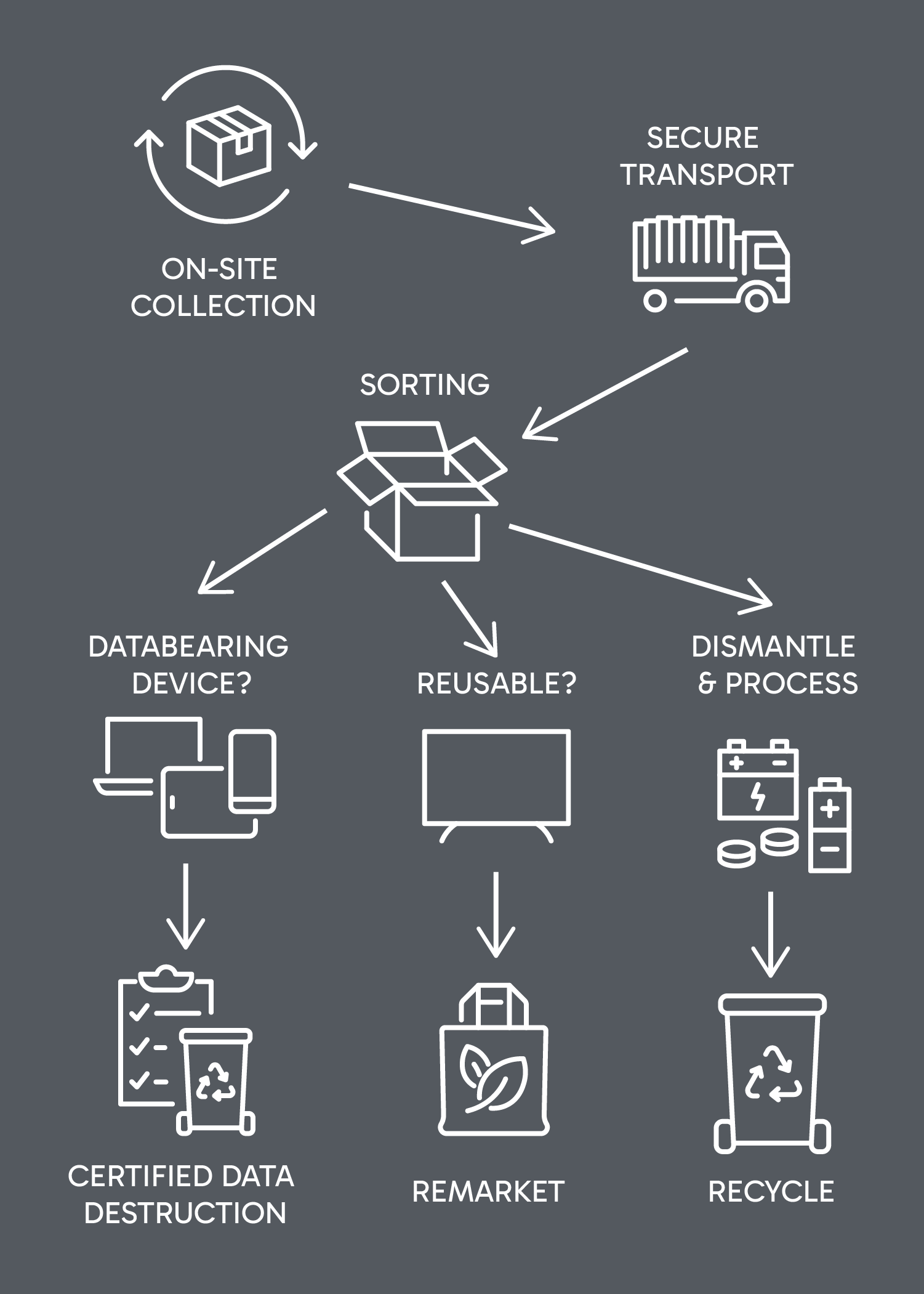
Our team will come to your location and pick up your end-of-life equipment or your recycling collection bins or totes. Our drivers and team are trained to handle your assets and data and keep them secure every step of the way.
Transporting sensitive electronic recyclables requires safe and secure handling and our team of trained asset handlers have what it takes. We take care of the logistics of pick up and delivery to ensure that the ewaste or electronics arrive safely.
Because e-waste contains many different types of materials, including plastics, glass, metals and more, there are several steps to recover the resources efficiently. Electronic items are first manually sorted. Some items are shredded to reduce them in size so that the reusable material within them is efficiently recovered. Items that should not be shredded or reduced, such as fluorescent lights, batteries, or hazardous materials.
Depending on the type of materials being recycled, there could be different outcomes: Refurbishing, Data Destruction, or Dismantle and Process

The data from these electronics are securely removed first, then the products are reintroduced into the marketplace, thus keeping them out of landfills as long as possible.
For computers, servers, tablets and phones – anything that carries your data – it’s crucial to properly destroy personal and confidential information, while keeping the products out of the landfill or in nefarious hands.
There are different methods and levels of destruction available, depending on your requirements as well as what is in compliance with specific industry standards. Using the National Institute of Standards and Technology method of sanitizing hard drives and electronic media removes the data completely from a readable drive. Damaged drives are shredded.
Electronic items are reduced in size by shredding or crushing which breaks them down into fragments which can then be separated further. Magnets are used to remove steel and iron. Other methods are used to separate non-metallic materials from other metals like aluminum, brass, or copper. Plastic and glass are separated by using water. CRTs (cathode ray tubes), which contain toxins like lead, are handled in a separate process to avoid releasing these toxins into the environment or exposing them to humans and animals.
Once properly separated and cleaned, each of these types of materials are then sold or downstreamed to other recyclers so that they can be made into new products.
The last step after each of these methods is a complete reporting of the assets that were removed from the business, how and when they were processed, and a certificate of recycling or destruction is provided.
Have questions or ready to schedule a pickup?